
Mother of All Deals: India-EU
Have a doubt?
Contact Us
The “Mother of All Deals”: India-EU Decoding Free Trade Agreement (2026), On January 27, 2026, India and the European Union (EU) made history by concluding negotiations for a landmark Free Trade Agreement (FTA), famously dubbed the “Mother of All Deals”. After nearly 20 years of stop-start negotiations that began in 2007, this pact creates one of the world’s largest integrated markets, connecting 2 billion people and representing approximately 25% of global GDP. The “mother of all deals”: that’s how European Commission President Ursula von der Leyen described the new free trade agreement between the European Union and India, announced on Tuesday after about two decades of negotiations. The deal will affect a combined population of 2 billion people across economies representing about a quarter of global GDP.
Speaking in New Delhi, von der Leyen characterised the agreement as a “tale of two giants” who “choose partnership, in a true win-win fashion”.
So, what have both sides agreed to – and why does it matter so much for global trade?
For aspirants of NDA, CDS, and UPSC, this deal is not just a trade update—it is a massive shift in India’s strategic autonomy and economic diplomacy.
1. Why is it called the “Mother of All Deals”: India-EU ?
The scale of this agreement is unprecedented. It is the most ambitious trade pact ever concluded by either side. Under this agreement, tariffs on 96.6% of EU goods exported to India will be eliminated or reduced. This will reportedly mean savings of approximately €4 billion (about A$6.8 billion) annually in customs duties on European products.
The automotive sector is the big winner. European carmakers – including Volkswagen, BMW, Mercedes-Benz and Renault – will see tariffs on their vehicles gradually reduced from the current punitive rate of 110% to as little as 10%.
The reduced tariffs will apply to an annual quota of 250,000 vehicles, which is six times larger than the quota the UK received in its deal with India.
To protect India’s domestic manufacturers, European cars priced below €15,000 (A$25,500) will face higher tariffs, while electric vehicles get a five-year grace period.
- Massive Market: A unified trade zone covering 2 billion consumers.
- Trade Volume: Bilateral trade reached $136.5 billion in 2024-25, with expectations to double EU exports to India by 2032.
- Geopolitical Signal: The deal was fast-tracked as a “strategic anchor” to counter global trade fragmentation and reduce dependency on unpredictable trade partners.
2. Mother of All Deals: India-EU FTA Key Features
The agreement is built on three major pillars: Trade in Goods, Services & Mobility, and Security Partnership.
A. Trade in Goods (Tariff Slashing)
- India’s Gains: The EU will eliminate tariffs on 99.5% of items India exports.
- Immediate Zero Duty: Over 70% of tariff lines (covering 90% of export value) get immediate duty-free access.
- Beneficiary Sectors: Textiles, leather, footwear, gems & jewellery, and marine products.
- EU’s Gains: India will offer tariff concessions on 97.5% of the traded value of EU exports.
- Automobiles: Duties on high-end European cars (above ₹25 lakh) will drop from 110% to as low as 10% under a quota system.
- Wines & Spirits: Tariffs slashed from 150% to 20–30% for medium and premium varieties.
B. Services and Talent Mobility
- IT & Professional Services: The EU has opened 144 subsectors (including IT, healthcare, and education) to Indian professionals.
- Visa & Mobility: A structured framework for the temporary entry and stay of skilled workers (Mode 4), including spouses and dependents of corporate transferees.
- Social Security: Both sides agreed to finalize Social Security Agreements within five years to prevent double contributions for Indian professionals.
C. Security and Defence Partnership
Beyond trade, a new framework was signed to collaborate on cyber threats, maritime security in the Indo-Pacific, and counter-terrorism.
3. Strategic Significance for UPSC/NDA/CDS Aspirants
This deal is a goldmine for GS Paper II (IR) and GS Paper III (Economy).
- “China-Plus-One” Strategy: Positions India as a reliable alternative to China for European supply chains.
- Strategic Autonomy: By strengthening ties with Brussels, New Delhi balances its dependence on the US and Russia.
- Viksit Bharat 2047: Supports India’s goal of becoming a developed nation by integrating domestic manufacturing (Make in India) with global markets.
- Brussels Effect: Indian industries will need to upgrade quality standards (environmental and labour) to match EU regulations, making Indian goods globally competitive.
4. Challenges and Sensitive Exclusions
Despite the “win-win” narrative, several hurdles remain:
- Carbon Border Adjustment Mechanism (CBAM): EU’s carbon tax could still impact Indian steel and aluminium exports.
- Sensitive Sectors: India has excluded dairy, cereals, and certain poultry items to protect the livelihoods of domestic farmers.
- Intellectual Property (IP): While the deal strengthens IP protection, it retains TRIPS flexibilities, ensuring India can still manufacture affordable generic medicines.
Conclusion
The India-EU FTA is a watershed moment in 21st-century diplomacy. It signals that in a world of rising protectionism, the world’s largest democracies are choosing cooperation over conflict. For aspirants, understanding the nuances of this “Mother of All Deals” is essential for tackling questions on international trade, bilateral relations, and global economic shifts.
Stay ahead in your prep with The Original Tutors!
Follow us for more deep dives into Current Affairs for UPSC, CDS, and NDA.
Mother of All Deals: India-EU
The “Mother of All Deals”: India-EU Decoding Free Trade Agreement (2026), On January 27, 2026, India and the European Union (EU) made history by concluding negotiations for a landmark Free Trade Agreement (FTA), famously dubbed the “Mother of All Deals”. After nearly 20 years of stop-start negotiations that began in 2007, this pact creates one of the world’s…
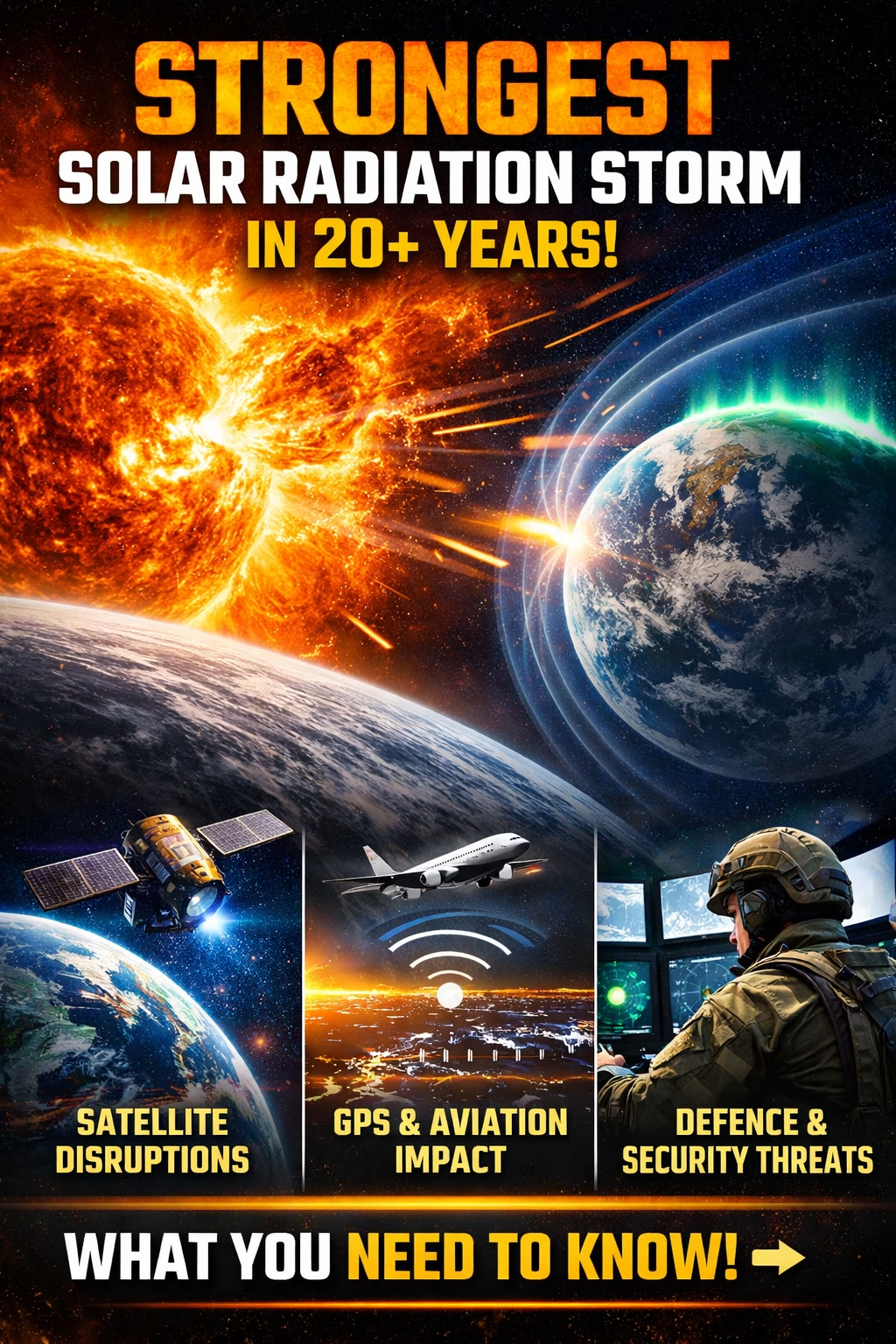
Earth Hit by Strongest Solar Radiation Storm in 20+ Years
💥 Earth Just Hit by the Strongest Solar Radiation Storm in Over 20 Years — Explained Earth Hit by Strongest Solar Radiation Storm, On January 19, 2026, Earth was struck by a severe solar radiation storm, the most powerful in more than two decades, according to space weather scientists and NOAA’s Space Weather Prediction Center.…
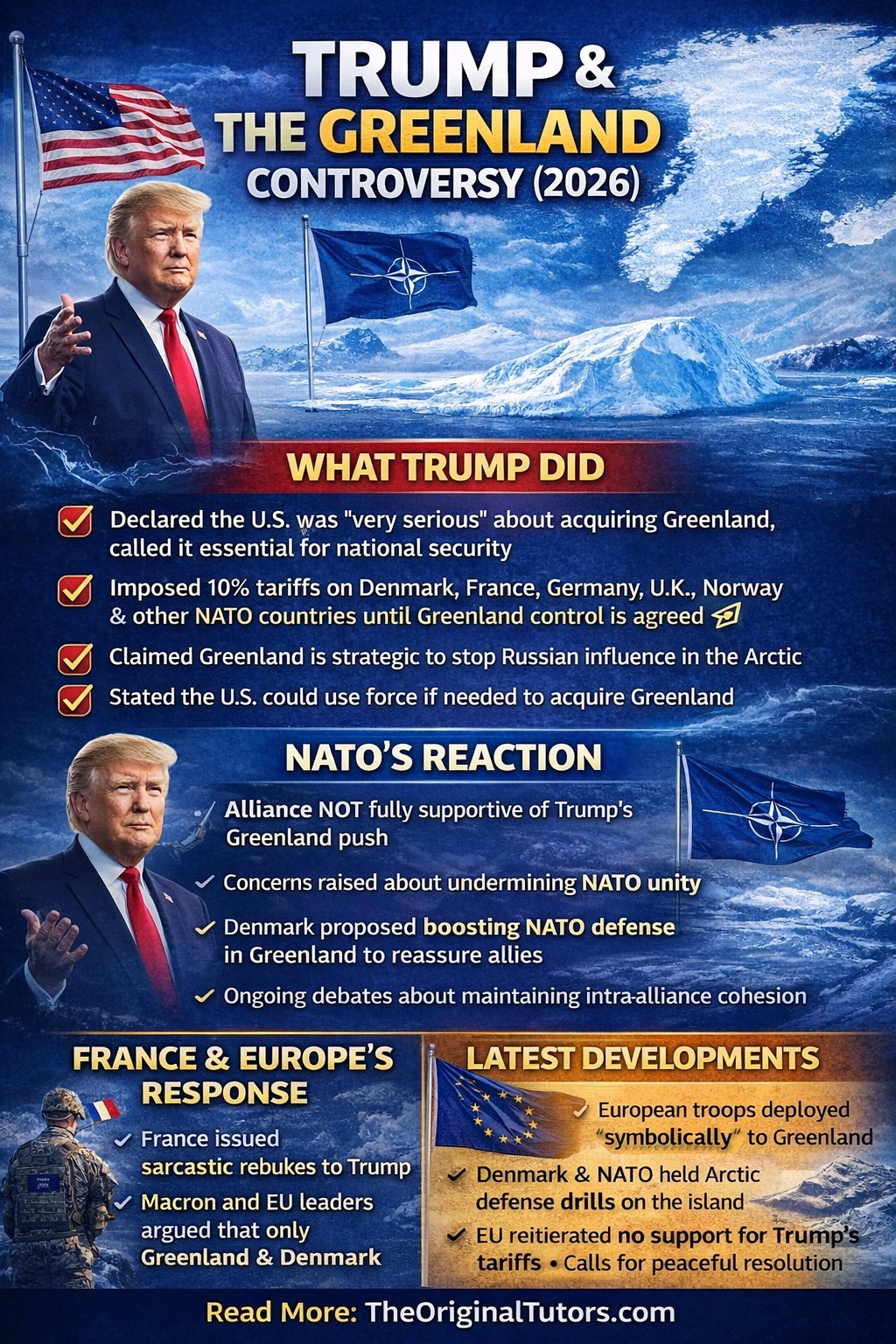
Trump’s Greenland Push Explained: NATO, France React & Latest Developments
What Trump Did: Background and Escalation Over Greenland Trump’s Greenland Push Explained: NATO, France React & Latest Developments: In early 2026, former U.S. President Donald Trump reignited international controversy by escalating rhetoric around Greenland, a large Arctic territory that is part of the Kingdom of Denmark. Trump repeatedly described Greenland as “strategically crucial” for U.S.…