
Trump’s Greenland Push Explained: NATO, France React & Latest Developments
Have a doubt?
Contact Us
What Trump Did: Background and Escalation Over Greenland
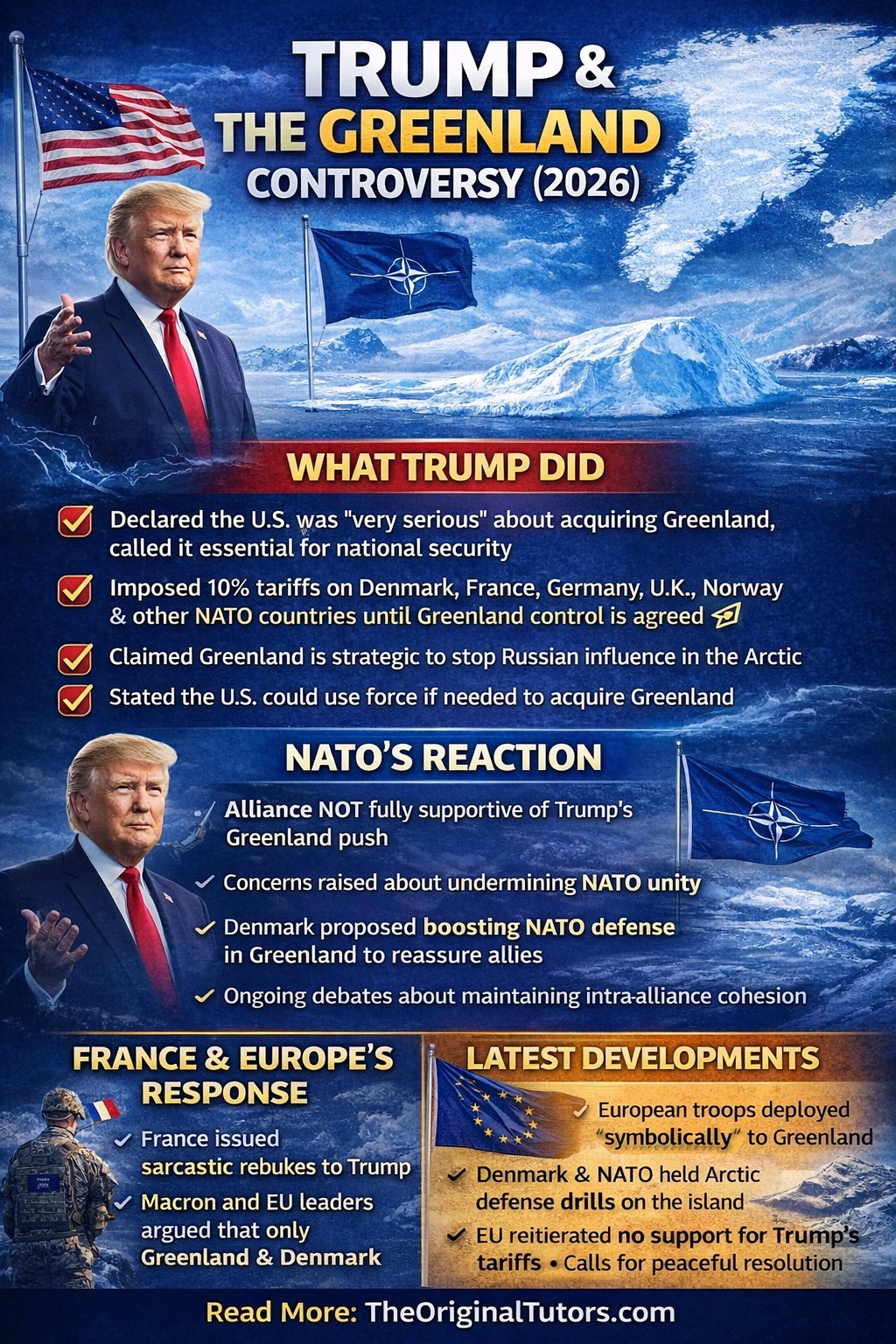
Trump’s Greenland Push Explained: NATO, France React & Latest Developments: In early 2026, former U.S. President Donald Trump reignited international controversy by escalating rhetoric around Greenland, a large Arctic territory that is part of the Kingdom of Denmark. Trump repeatedly described Greenland as “strategically crucial” for U.S. interests, emphasizing its importance for military and defense operations in the Arctic.
Can the U.S. legally acquire Greenland?
In interviews and official statements, Trump said the United States was “very serious about acquiring Greenland” and even declined to rule out the use of force to obtain the territory, asserting that control over Greenland was essential to national security. He framed Greenland not only as a land rich in minerals and resources but as a key location to counter Russian influence in the Arctic, where Moscow has been expanding its military footprint.
Is Greenland already part of NATO?
To pressure European NATO members and bolster U.S. negotiating leverage, Trump announced tariffs of 10% on imports from several NATO countries — including Denmark, France, Germany, the U.K., Norway, Sweden, the Netherlands, and Finland — until Greenland’s fate was resolved in America’s favor. Critics viewed this as an unprecedented use of economic coercion against long-time allies.Trump’s Latest Statement on Greenland
On January 4–6, 2026, U.S. President Donald Trump reignited global attention on the Arctic by publicly stating that the United States “needs Greenland” from a national security standpoint and hinted that Washington could take action regarding its status — which has triggered strong pushback from Denmark, Greenland, and European allies. �
Trump’s Latest statement on Greenland refers to one of the world’s most strategic territories — Greenland, an autonomous part of the Kingdom of Denmark — and highlights deep geopolitical tensions involving sovereignty, international law, Arctic strategy, and NATO security frameworks.
Why Greenland Matters: U.S. Security, Russia, and Arctic Strategy
In a recent interview, Trump reiterated that Washington “needs Greenland from the standpoint of national security” — citing concerns about Russian and Chinese presence in the Arctic and framing Greenland as crucial to U.S. defense interests.
This isn’t the first time Trump has raised this issue — he first sparked global discussion about buying Greenland back in 2019 — but his latest remarks come amid intense U.S. military actions in Venezuela, amplifying fears that geopolitical ambitions could extend toward Greenland.
Trump’s Greenland Push Explained: NATO, France React & Latest Developments🌍 Background: Greenland’s Strategic Importance
Greenland is the largest island on Earth, rich in natural resources (including rare minerals) and strategically located between North America and Europe. Its positioning makes it a key hub for military and missile defense in the Arctic region — an area of increasing global competition among the U.S., Russia and China.
Although Greenland enjoys self-rule, Denmark oversees its foreign affairs and defense, and the territory remains a NATO member through its connection to Denmark.
🇩🇰 Denmark and Greenland’s Firm Response
Denmark’s Prime Minister Mette Frederiksen strongly condemned the U.S. remarks, stating bluntly that the U.S. has no right to annex or take over Greenland — emphasizing that the territory is not for sale.
She further warned that any U.S. military action against another NATO ally would severely damage the alliance’s credibility and could even mean the end of NATO’s collective defense framework (Article 5).
Meanwhile, Greenland’s Prime Minister Jens-Frederik Nielsen reacted with equal force on social media, saying “that’s enough” and underscoring that decisions about Greenland’s future must happen with respect for international law and through proper diplomatic dialogue.
NATO’s Reaction: Alliance Unity Tested Over Greenland
NATO as an alliance stopped short of endorsing Trump’s stance on Greenland. Several European capitals expressed concern that Trump’s aggressive rhetoric and tariff threats could undermine the unity and credibility of the alliance. Since Greenland is part of the Kingdom of Denmark — and Denmark is a NATO member — any dispute over control of the island inherently involved NATO’s collective security framework.
Denmark’s Response and NATO’s Arctic Defense Strategy
To reassure member states and counter fears of unilateral action, Denmark proposed strengthening NATO surveillance and defense operations in Greenland. This included expanded monitoring systems and joint exercises designed to signal that NATO remained committed to mutual defense while keeping Greenland’s sovereignty intact.
Trump’s Greenland Push Explained: NATO, France React & Latest Developments. Could this dispute weaken NATO?
Inside NATO, officials debated how to maintain alliance solidarity in the face of economic pressure and political divergence. Some senior diplomats urged restraint and called for diplomatic engagement rather than confrontation, stressing that intra-alliance tensions could weaken NATO against external threats.
France Pushes Back: Macron and Europe Reject U.S. Pressure
France was among the most vocal European critics of Trump’s approach to Greenland. French leaders responded with a combination of diplomatic firmness and public rebukes, including sharp, sometimes sarcastic replies that challenged U.S. claims about defense prerogatives in the Arctic.
French President Emmanuel Macron, along with other European heads of state, condemned the tariff threats and asserted that decisions about Greenland’s future should be made solely by Denmark and the people of Greenland, without external coercion. Macron emphasized the importance of respecting international law and national sovereignty.
European Union’s Stand on Greenland’s Sovereignty
Europe’s broader reaction was one of unity: EU foreign affairs representatives and NATO partners issued a joint statement affirming that territorial decisions regarding Greenland belong exclusively to the Kingdom of Denmark and the people who live there. This unified European stance was intended to demonstrate collective resistance to pressure tactics from outside the region.
Latest Developments: Troop Movements, Exercises, and EU Action
As tensions continued into 2026, several European countries took symbolic and practical steps to reinforce their commitment to Arctic stability. Small military contingents from NATO European members were deployed to Greenland as a show of solidarity and to support defense efforts alongside Danish forces.
Denmark itself increased its troop presence and coordinated NATO-aligned military exercises designed to bolster the island’s defenses and reassure local communities. These exercises emphasized cooperation with other alliance members, rather than conflict.
Rising Arctic Tensions: What Happens Next?
At the EU level, leaders announced plans to invest in Arctic security infrastructure, including radar installations, logistics hubs, and enhanced surveillance capabilities. The European Union also reaffirmed its opposition to Trump’s tariff measures, making clear that economic coercion was unacceptable.
In the diplomatic arena, multiple foreign ministries and international organizations called for a return to peaceful negotiation. There were ongoing appeals for dialogue under international law frameworks, with repeated requests that the dispute be managed through established diplomatic channels rather than unilateral posturing.
Trump’s Greenland Push Explained: NATO, France React & Latest Developments. What This Means for Global Politics and Transatlantic Relations
The Greenland dispute quickly evolved into a broader debate over the future of transatlantic relations, NATO cohesion, and Arctic security. Many analysts warn that such high-profile tensions could weaken long-standing alliances by sowing mistrust between the United States and its traditional partners.
Observers have noted that:
- Economic pressure within alliances sets a concerning precedent.
- Divergence over strategic priorities (like Russia and China) highlights differing threat perceptions among Western countries.
- The Arctic is emerging as a geopolitical flashpoint where global powers are increasingly competing for influence.
The Greenland episode is seen by some diplomats as a test of alliance resilience. The ultimate outcome could shape how nations balance national ambitions with collective security commitments in the years ahead.
🧠 Why This Matters for Competitive Exams
For UPSC, CDS, NDA, CUET and State PSC aspirants, this development is a classic case study in international relations, foreign policy, global power dynamics, and Arctic geopolitics:
🔎 Exam-Relevant Concepts to Note
Sovereignty and Territorial Integrity
NATO Article 5 & Collective Security
Arctic Strategy: U.S., Russia, China Competition
International Law & Respect for Self-Determination
Resource Geopolitics (minerals, shipping routes)
📍 Possible Prelims MCQ Themes
Which regions are strategically critical in Arctic geopolitics?
What are the roles and responsibilities under NATO Article 5? How does self-governance differ from full independence in territories like Greenland?
🧩 Mains & Interview Angle
Discuss the implications of great power competition in the Arctic.
Evaluate how territorial sovereignty and international alliances shape global security.
📊 Broader Geopolitical Impact
Trump’s remarks have broader implications:
Strained U.S.–Denmark Relations
— Risking tensions between a longstanding NATO partnership.
Arctic Security Race
— Accelerating defense and strategic competition among major powers.
International Law & Precedents
— Challenges norms around respect for sovereignty and peaceful diplomacy.
🧩 Conclusion: A Turning Point in Arctic Diplomacy
Donald Trump’s statements about Greenland have sparked widespread global concern, crossing from political rhetoric into serious geopolitical discourse. With Denmark, Greenland, and European nations rejecting U.S. territorial claims, the episode highlights fundamental principles of sovereignty, alliance obligations, and international law.
For students and aspirants, this issue connects directly to GS Paper II & III topics and offers rich material for essays, mains answers, and interview perspectives. Understanding it deeply will not only boost current affairs preparation but also enhance analytical skills in geopolitics and global strategy.
For more such International issues related posts click the given link given below:
https://theoriginaltutors.com/category/current-affairs/
Mother of All Deals: India-EU
The “Mother of All Deals”: India-EU Decoding Free Trade Agreement (2026), On January 27, 2026, India and the European Union (EU) made history by concluding negotiations for a landmark Free Trade Agreement (FTA), famously dubbed the “Mother of All Deals”. After nearly 20 years of stop-start negotiations that began in 2007, this pact creates one of the world’s…
Earth Hit by Strongest Solar Radiation Storm in 20+ Years
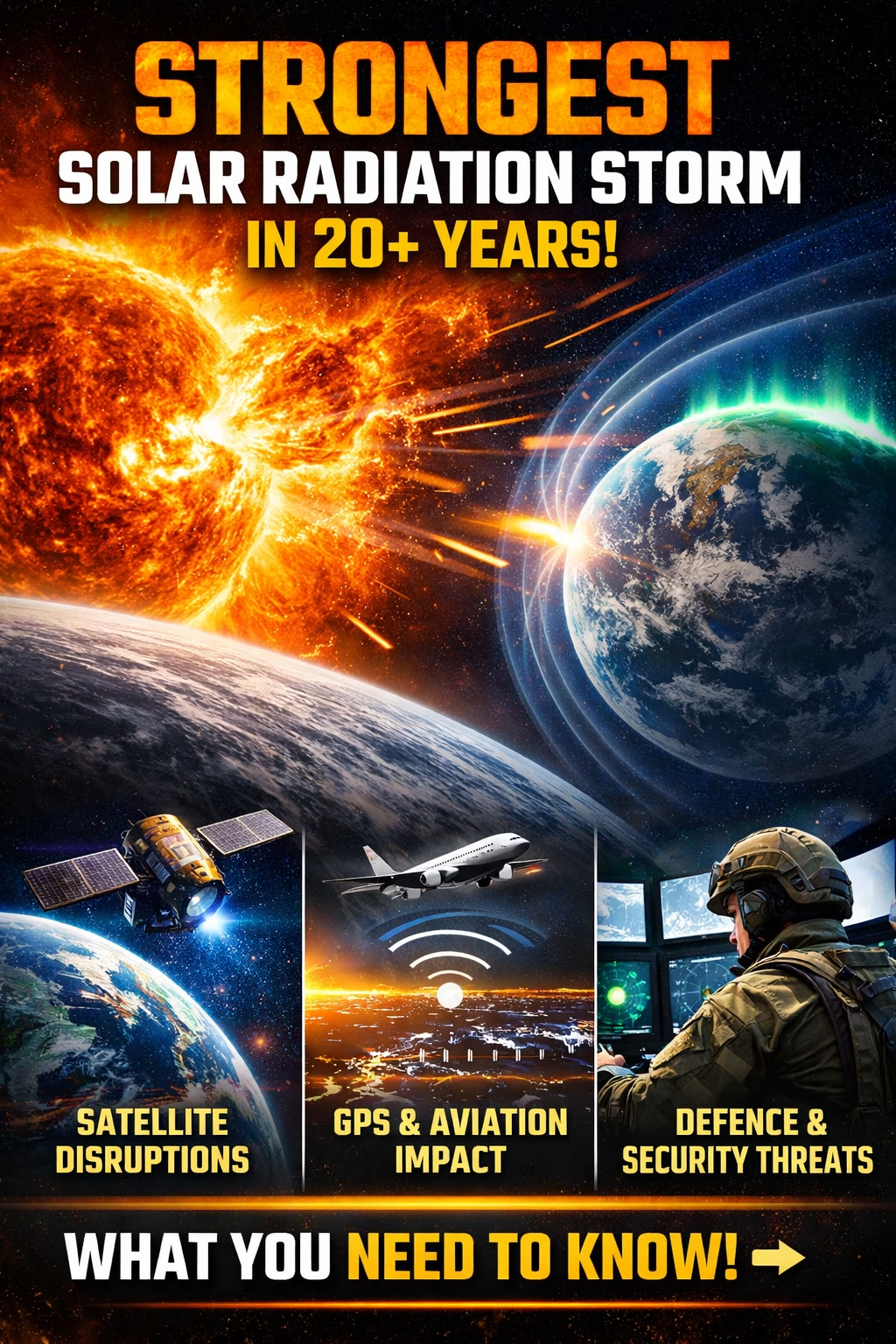
💥 Earth Just Hit by the Strongest Solar Radiation Storm in Over 20 Years — Explained Earth Hit by Strongest Solar Radiation Storm, On January 19, 2026, Earth was struck by a severe solar radiation storm, the most powerful in more than two decades, according to space weather scientists and NOAA’s Space Weather Prediction Center.…
Trump’s Greenland Push Explained: NATO, France React & Latest Developments
What Trump Did: Background and Escalation Over Greenland Trump’s Greenland Push Explained: NATO, France React & Latest Developments: In early 2026, former U.S. President Donald Trump reignited international controversy by escalating rhetoric around Greenland, a large Arctic territory that is part of the Kingdom of Denmark. Trump repeatedly described Greenland as “strategically crucial” for U.S.…